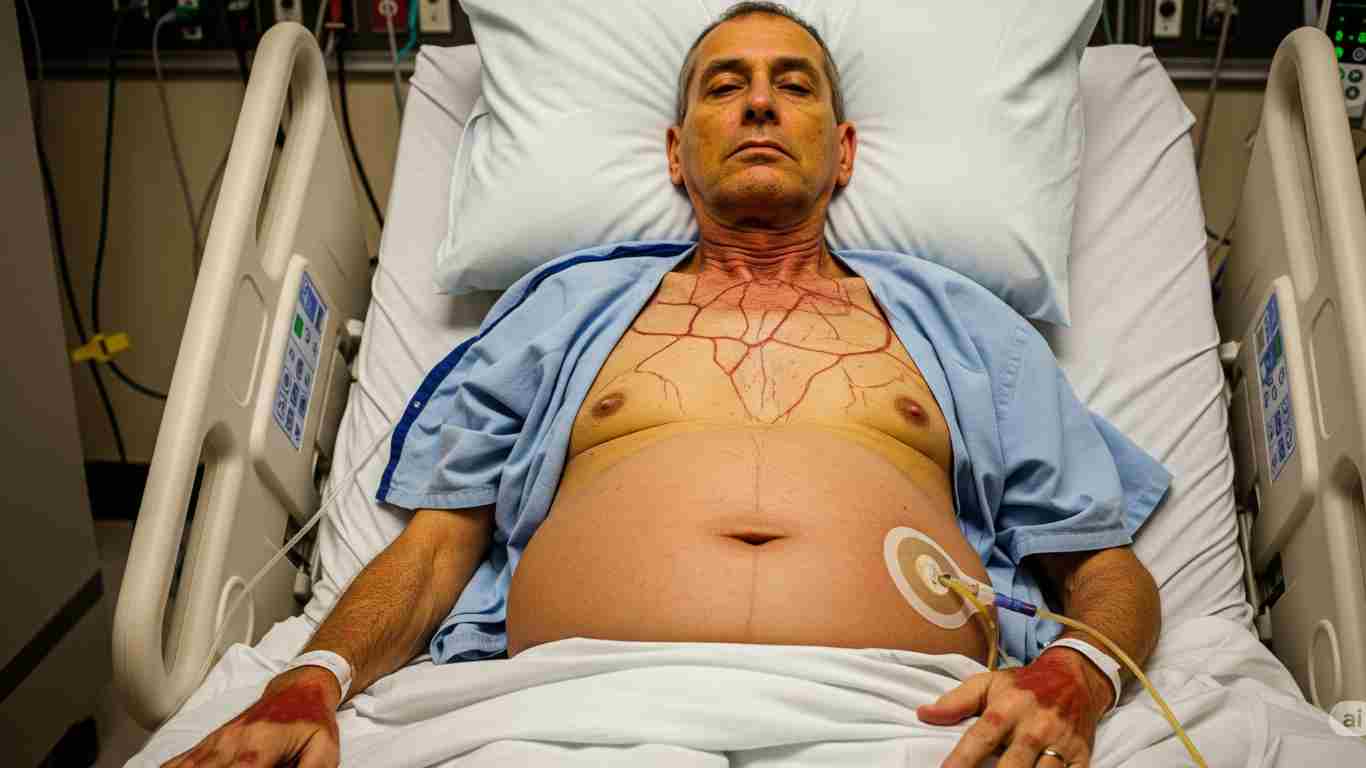
Part 1Part 2Part 3Part 4Part 5 /10 Report a question What’s wrong with this question? You cannot submit an empty report. Please add some details. 12345678910 Hepatobiliary Disorders (Medicine) Part 1 1 / 10 A. 51 year old man who is diagnosed as having chronic alcoholic liver disease, presented with a history of abdominal distension and ankle oedema. On examination he was febrile, icteric and mild abdominal tenderness was there with an ascites. Which of the following step is best to find out the cause for his presentation? Blood culture Peritoneal fluid aspiration Full blood count Urine full report USS abdomen Oops! The patient has decompensated cirrhosis and signs/symptoms suggesting infection (fever, tenderness). What investigation directly assesses for peritoneal infection? Correct! Well done. Explanation: The patient presents with decompensated alcoholic liver disease (jaundice, ascites, oedema) and signs suggestive of an acute complication, specifically infection given the fever and abdominal tenderness. Spontaneous Bacterial Peritonitis (SBP) must be suspected. a) Blood culture: Incorrect. Blood cultures are important as bacteraemia can occur with SBP, but they are positive in only a minority of cases and results take time. Ascitic fluid analysis is more direct. K&C (p. 1306) state blood cultures are positive in only 30% of liver abscess cases, implying they are not always positive in infection. b) Peritoneal fluid aspiration: Correct. Diagnostic paracentesis (peritoneal fluid aspiration) for cell count (especially neutrophils), Gram stain, and culture is the definitive investigation to diagnose or exclude SBP, the most likely cause of fever and tenderness in this setting. K&C (p. 1297) under SBP state: “Diagnostic aspiration should always be performed.” c) Full blood count: Incorrect. FBC may show leucocytosis supporting infection but is non-specific and doesn’t confirm the source. d) Urine full report: Incorrect. Urinary tract infection is another possible source of fever, but abdominal tenderness points more towards an intra-abdominal process like SBP. e) USS abdomen: Incorrect. Ultrasound can confirm ascites and assess the liver/spleen but cannot diagnose SBP. It might identify other causes like liver abscess but is less direct for suspected SBP. Conclusion: Ascitic fluid aspiration (diagnostic paracentesis) is the best investigation to confirm or refute the likely diagnosis of SBP in this patient. 2 / 10 B. Regarding hepatic encephalopathy, Slow waves in EEG Causes asterixis Treat with metronidazole Dietary restriction of protein Precipitated by constipation Check Oops! Revisit the features and management of hepatic encephalopathy. Correct! Well done. Explanation: a. Slow waves in EEG: Correct. Electroencephalogram (EEG) characteristically shows a decrease in wave frequency, with slowing from the normal alpha rhythm (8-13 Hz) down towards delta waves (1.5-3 Hz) as encephalopathy worsens. K&C (p. 1297) state: “EEG shows a decrease in the frequency of the normal α-waves (8–13 Hz) to 1.5–3 Hz.” b. Causes asterixis: Correct. Asterixis, or flapping tremor, is a classic (though not specific) physical sign of hepatic encephalopathy, elicited by asking the patient to hyperextend their wrists. K&C (p. 1297) list ‘a coarse flapping tremor seen when the hands are outstretched and wrists hyperextended (asterixis)’ as a sign. c. Treat with metronidazole: Correct. While lactulose and rifaximin are primary treatments, other antibiotics that modulate gut flora, like metronidazole or neomycin, can be used, although potentially with more side effects or toxicity. K&C (p. 1297) mention Metronidazole as potentially effective acutely. d. Dietary restriction of protein: Incorrect (generally). As discussed before (Q7, 2019 March), strict or prolonged protein restriction is generally avoided due to malnutrition risk. Adequate protein intake is aimed for once treatment is initiated. K&C (p. 1297) advise against restriction for >48 hours. e. Precipitated by constipation: Correct. Constipation increases the time available for gut bacteria to produce ammonia and other toxins from dietary protein, which are then absorbed, potentially precipitating HE. K&C Box 34.22 lists ‘Constipation’ as a precipitating factor. 3 / 10 C. Poor prognostic factors of CLCD? Elevated serum bilirubin Low serum albumin Elevated globulin Prolonged INR Low serum sodium Check Oops! Recall the clinical and laboratory parameters indicating advanced liver dysfunction and poor prognosis in cirrhosis. Correct! Well done. Explanation: Several factors indicate a poor prognosis in chronic liver cell disease (CLCD), particularly cirrhosis. a. Elevated serum bilirubin: Correct. Rising bilirubin reflects impaired hepatic excretory function and is a key component of prognostic scores like Child-Pugh and MELD, indicating worsening liver failure. K&C Box 34.15 lists ‘Persistent jaundice’ clinically. Child-Pugh score (Box 34.16) uses bilirubin levels. b. Low serum albumin: Correct. Hypoalbuminemia reflects impaired hepatic synthetic function and is another key indicator of advanced liver disease and poor prognosis, included in Child-Pugh score. K&C Box 34.15 lists ‘Low albumin (<28 g/L)'. c. Elevated globulin: Incorrect. While globulins (particularly gamma-globulins) can be elevated in chronic liver disease (especially autoimmune hepatitis or due to reduced Kupffer cell clearance), a high globulin level itself is not typically considered a primary *poor* prognostic factor compared to markers of synthetic or excretory failure like albumin or bilirubin. K&C (p. 1269) mention raised globulins in AIH. d. Prolonged INR: Correct. An elevated International Normalized Ratio (INR), reflecting prolonged prothrombin time (PT), indicates impaired synthesis of clotting factors by the liver. It is a sensitive marker of liver synthetic function and a key component of prognostic scores (Child-Pugh, MELD). K&C Box 34.15 lists ‘Prolonged prothrombin time >6 sec above normal value’. e. Low serum sodium: Correct. Hyponatremia (<125-130 mmol/L) in cirrhosis often reflects impaired free water excretion (dilutional hyponatremia) related to advanced disease, activation of neurohumoral systems, and severe portal hypertension. It is a strong independent predictor of mortality and complications like HE and HRS. K&C Box 34.15 lists 'Low serum sodium (<125 mmol/L)'. Kumar & Clark states: Box 34.15 lists ‘Poor prognostic indicators in cirrhosis’ including Low albumin (<28 g/L), Low serum sodium (6 sec above normal value, Raised creatinine >130 µmol/L, Persistent jaundice, Failure of response to therapy, Ascites, Haemorrhage from varices, Neuropsychiatric complications, Small liver, Persistent hypotension, and Aetiology (e.g. ongoing alcohol use). 4 / 10 D. What are the measures used in acute variceal bleeding Spironolactone Octreotide Banding Terlipressin Propranolol Check Oops! Review the pharmacological and endoscopic interventions for acute variceal haemorrhage. Correct! Well done. Explanation: Management of acute variceal bleeding involves resuscitation, pharmacological therapy to reduce portal pressure, and endoscopic treatment. 1) Spironolactone: Incorrect. This is a diuretic used for managing ascites, not acute variceal bleeding. 2) Octreotide: Correct. Octreotide (a somatostatin analogue) is a vasoactive drug used to reduce splanchnic blood flow and portal pressure during acute variceal bleeding. It is often used alongside endoscopic therapy. K&C (p. 1294) mention somatostatin (and its analogue octreotide) under vasoconstrictor therapy. 3) Banding: Correct. Endoscopic variceal ligation (banding) is the preferred endoscopic treatment for controlling acute oesophageal variceal bleeding. K&C (p. 1294) state: “Banding of oesophageal varices is performed…”. 4) Terlipressin: Correct. Terlipressin (a vasopressin analogue) is another vasoactive drug, proven to reduce mortality, used to reduce portal pressure in acute variceal bleeding. K&C (p. 1294) state: “Terlipressin. This is the only vasoconstrictor proven to reduce mortality.” 5) Propranolol: Incorrect. Non-selective beta-blockers like propranolol are used for *prophylaxis* (preventing the first bleed or rebleeding), not for managing the acute bleeding episode itself. Conclusion: Measures used in acute variceal bleeding include vasoactive drugs (Octreotide, Terlipressin) and endoscopic therapy (Banding). 5 / 10 E. 55 year old known cirrhotic patient came with altered consciousness, ascites, jaundice. Which of the following will relive his altered consciousness? Propranolol Abdominal paracentices Treatment with ceftriaxone Lactulose therapy Diuretic therapy Check Oops! Consider the standard treatments for hepatic encephalopathy and treatments for potential precipitants like infection. Correct! Well done. Explanation: The patient presents with hepatic encephalopathy (altered consciousness) in the setting of decompensated cirrhosis (ascites, jaundice). Management focuses on treating the encephalopathy directly and addressing any precipitants. 1) Propranolol: Incorrect. Beta-blockers are used for portal hypertension/variceal prophylaxis and are generally stopped or reduced during acute decompensation episodes like severe HE or SBP. 2) Abdominal paracentices: Incorrect. Paracentesis treats ascites but does not directly treat HE, although large volume paracentesis without albumin can sometimes worsen circulatory function and potentially HE. Diagnostic paracentesis is needed to exclude SBP as a precipitant. 3) Treatment with ceftriaxone: Correct (Potentially). If infection (like SBP) is suspected as the precipitant for the altered consciousness (which is common), treating the infection with antibiotics like ceftriaxone is crucial and will help resolve the HE. K&C Box 34.22 lists infection as a precipitant. 4) Lactulose therapy: Correct. Lactulose is a first-line treatment for hepatic encephalopathy, reducing ammonia production and absorption in the gut. K&C (p. 1297) list lactulose under management. 5) Diuretic therapy: Incorrect. Diuretics treat ascites but can cause electrolyte disturbances or volume depletion, potentially worsening HE. They should often be held during acute HE episodes. K&C Box 34.22 lists ‘Fluid and electrolyte disturbance due to diuretic therapy’ as a precipitant. Conclusion: Lactulose directly treats HE, and treating potential precipitating infections (e.g., with Ceftriaxone if SBP is suspected) will also help relieve the altered consciousness. 6 / 10 F. Features of compensated liver disease Testicular atopy (atrophy assumed) Ascitis Flapping tremors Clubbing Parotid swelling Check Oops! Compensated liver disease means the liver is functioning sufficiently to prevent major complications. Which signs are typically associated with decompensation or severe chronic disease? Correct! Well done. Explanation: Compensated liver disease implies cirrhosis or chronic liver disease is present, but without the major complications like jaundice, ascites, variceal bleeding, or encephalopathy. However, some physical stigmata may still be present. a. Testicular atopy (atrophy assumed): Correct. Testicular atrophy is a sign of chronic liver disease, often seen in cirrhosis due to hormonal changes (altered oestrogen/testosterone metabolism), and can be present in compensated stages. K&C p. 1263 illustrates testicular atrophy as a sign. b. Ascitis: Incorrect. Ascites is a major complication indicating *decompensated* liver disease due to portal hypertension, sodium/water retention, and hypoalbuminemia. c. Flapping tremors: Incorrect. Asterixis (flapping tremor) is a sign of hepatic encephalopathy, another major complication indicating *decompensated* liver disease. d. Clubbing: Correct. Finger clubbing can be seen in chronic liver disease (as well as many other conditions) and may be present in the compensated stage. K&C p. 1263 illustrates clubbing. e. Parotid swelling: Correct. Parotid gland enlargement can be associated with chronic liver disease, particularly alcoholic liver disease, and can be present in compensated stages. K&C p. 1263 illustrates parotid swelling. Conclusion: Testicular atrophy, clubbing, and parotid swelling are signs that can be present in compensated chronic liver disease, while ascites and flapping tremors indicate decompensation. 7 / 10 G. 55 yr old male known patient with chronic liver disease, presented with progressive abdominal distension, edema & confusion for 5 days duration. On examination jaundice, fever 38oC drowsy. He is on spironolactone 100 mg, Frusemide 40mg & propranolol. WOF is the best next step of Mx? IV antibiotics Lactulose Abdominal pancreatitis (paracentesis assumed) Increase the dose of propronolol Increase the dose of spironolactone Oops! The patient has decompensated cirrhosis with fever, confusion, and worsening ascites despite diuretics. What diagnosis must be suspected and treated immediately? Correct! Well done. Explanation: This patient with known CLCD presents with worsening decompensation: increased ascites/oedema, confusion (hepatic encephalopathy), jaundice, and significantly, a fever (38°C). The fever in the context of worsening ascites and confusion strongly suggests an infection, most likely Spontaneous Bacterial Peritonitis (SBP), precipitating the deterioration. a. IV antibiotics: Correct. Given the high suspicion of SBP (fever, worsening ascites, confusion/HE), empirical broad-spectrum intravenous antibiotics (e.g., third-generation cephalosporin) should be started immediately after diagnostic paracentesis (or even before if paracentesis is delayed). Prompt treatment of SBP is crucial. K&C (p. 1297) highlight infection as a precipitant for HE and recommend antibiotics for SBP. b. Lactulose: Incorrect as the *best next* step. Lactulose treats the hepatic encephalopathy, which is important, but treating the likely underlying precipitant (infection) is the priority. Lactulose would be given concurrently or shortly after starting antibiotics. c. Abdominal pancreatitis (paracentesis assumed): Incorrect. *Diagnostic* paracentesis is essential to confirm SBP, but starting empirical antibiotics based on high clinical suspicion is often the most appropriate *immediate* management step, especially if paracentesis cannot be done instantly. Therapeutic paracentesis isn’t the priority over treating infection. d. Increase the dose of propronolol: Incorrect. Propranolol (a beta-blocker) should generally be stopped or reduced in the setting of SBP or significant decompensation/hypotension. K&C (p. 1297) mention stopping beta-blockers following SBP diagnosis. e. Increase the dose of spironolactone: Incorrect. Diuretics should be stopped or held in suspected SBP, particularly with potential haemodynamic instability or renal impairment. Conclusion: In a cirrhotic patient presenting with fever and worsening decompensation (ascites, HE), empirical IV antibiotics targeting SBP are the most critical immediate management step. 8 / 10 H. 54 year old known patient with alcoholic cirrhosis, presented with altered sleep pattern, ascites and ankle oedema. O/E his abdomen is tensed and tender. FBC – Hb-11g/dl, WBC -15,000(N-80%), PLT 150,000. Ascitic fluid-450/mm3 of neutrophils. What is the best management for this patient? Cefotaxime Frusemide Salt poor plasma Large volume paracentesis Low salt diet Oops! The patient has cirrhosis, tender ascites, and an ascitic neutrophil count >250/mm³. What does this indicate and how should it be managed? Correct! Well done. Explanation: The patient presents with decompensated cirrhosis (ascites, oedema, likely HE given altered sleep pattern) and findings highly suggestive of Spontaneous Bacterial Peritonitis (SBP): tender abdomen with ascites, fever implied by high WCC (15,000 with 80% neutrophils), and confirmed by ascitic fluid neutrophil count of 450/mm³ (>250/mm³ threshold). a. Cefotaxime: Correct. SBP requires prompt treatment with broad-spectrum intravenous antibiotics, typically a third-generation cephalosporin like cefotaxime or ceftriaxone, pending culture results. K&C (p. 1297) state under SBP management: “A broad-spectrum antibiotic is used, with subsequent alteration according to culture results…” b. Frusemide: Incorrect. Diuretics should generally be stopped or held during active SBP, especially if there is associated renal impairment or hemodynamic instability, as they can worsen renal function. c. Salt poor plasma: Incorrect. Albumin (salt poor albumin) infusion is often given *alongside* antibiotics for SBP, particularly if there is renal impairment or severe liver dysfunction, to reduce the risk of hepatorenal syndrome and improve survival, but antibiotics are the primary treatment for the infection itself. K&C (p. 1297) mention infusion of human albumin solution with antibiotics. d. Large volume paracentesis: Incorrect. Therapeutic large volume paracentesis is used to relieve tense ascites, but the priority here is treating the infection (SBP). Diagnostic paracentesis has already been done. e. Low salt diet: Incorrect. While important for long-term ascites management, dietary changes are not the acute treatment for SBP. Conclusion: The patient has SBP based on the clinical picture and ascitic fluid neutrophil count, requiring immediate treatment with appropriate intravenous antibiotics like cefotaxime. 9 / 10 I. T/f which of the following causes cirrhosis as a consequence or complication? Hep E infection Alcoholic steatohepatitis Acute PCM poisoning (Paracetamol, rarely causes cirrhosis directly but fulminant failure) Non-alcoholic steatohepatitis (NASH) Chronic Hepatitis C Check Oops! Consider the long-term outcomes of different liver injuries. Correct! Well done. Explanation: Cirrhosis results from chronic liver injury and subsequent fibrosis. a) Hep E infection: Incorrect. Hepatitis E typically causes acute, self-limiting hepatitis. Chronic infection and potential cirrhosis development is recognized but rare, occurring primarily in immunosuppressed individuals. K&C Box 34.14 (Causes of Cirrhosis) does not list Hepatitis E. b) Alcoholic steatohepatitis: Correct. Alcoholic steatohepatitis represents significant liver inflammation due to alcohol. If alcohol consumption continues, it frequently progresses to fibrosis and ultimately cirrhosis. K&C (p. 1303) state: “If alcohol consumption continues, alcoholic hepatitis may progress to cirrhosis.” c) Acute PCM poisoning (Paracetamol, rarely causes cirrhosis directly but fulminant failure): Incorrect. Paracetamol overdose causes acute liver failure due to massive necrosis. While survivors may develop some fibrosis, progression to established cirrhosis from a single acute overdose is not typical. Chronic liver damage might occur with repeated sub-toxic ingestions, but acute poisoning leads to ALF or recovery. d) Non-alcoholic steatohepatitis (NASH): Correct (Assumed option). NASH is a well-established cause of chronic liver inflammation that can progress to cirrhosis. K&C Box 34.14 lists NAFLD as a common cause. e) Chronic Hepatitis C: Correct (Assumed option). Chronic HCV infection is a leading cause of cirrhosis worldwide. K&C Box 34.14 lists Hepatitis C as a common cause. 10 / 10 J. T/F Regarding Liver Physiology and Cirrhosis Liver receives 80% of blood supply by hepatic artery Encephalopathy in apt with cirrhosis indicate poor prognosis Commonest cause for cirrhosis in Sri Lanka is Hep B Portal pressure is normally <5 mmHg Liver transplantation is contraindicated in alcoholic cirrhosis Check Oops! Review basic liver blood supply and prognostic implications in cirrhosis. Correct! Well done. Explanation: a) Liver receives 80% of blood supply by hepatic artery: Incorrect. The liver has a dual blood supply. The hepatic artery supplies about 25% of the blood flow (oxygenated), while the portal vein supplies about 75% (nutrient-rich, less oxygenated). K&C (p. 1264) state: “The hepatic artery… supplies 25% of the hepatic blood flow… The portal vein… supplies 75% of hepatic blood flow.” b) Encephalopathy in apt with cirrhosis indicate poor prognosis: Correct. The development of hepatic encephalopathy is a major sign of decompensated cirrhosis and indicates significant liver dysfunction and/or portosystemic shunting. It is associated with a significantly poorer prognosis and increased mortality. K&C Box 34.15 includes ‘Neuropsychiatric complications developing with progressive liver failure’ as a poor prognostic indicator. c) Commonest cause for cirrhosis in Sri Lanka is Hep B: Plausible but Alcohol is also key. Globally, the commonest causes are alcohol, HBV, and HCV. While HBV is endemic in parts of Asia, alcohol-related liver disease is also extremely prevalent in Sri Lanka and may be the leading cause or co-leading cause. This statement is debatable and depends on specific local epidemiology, which often points to alcohol as the primary driver in recent years. Without specific Sri Lankan data referenced, it’s hard to definitively confirm, but alcohol is a major contender. Let’s mark as incorrect based on alcohol’s high prevalence. d) Portal pressure is normally <5 mmHg: Incorrect (Assumed option). Normal portal pressure is typically 5-8 mmHg. Pressures above 10-12 mmHg define clinically significant portal hypertension. K&C (p. 1264) state: “The normal portal pressure is 5–8 mmHg”. K&C (p. 1292) state: “As portal pressure rises above 10–12 mmHg, the compliant venous system dilates…”. e) Liver transplantation is contraindicated in alcoholic cirrhosis: Incorrect (Assumed option). Liver transplantation is a recognized treatment for end-stage alcoholic liver disease in patients who are abstinent and well-motivated. K&C (p. 1292) state: “Well-motivated patients who have stopped drinking without improvement of liver disease are offered a transplant…”. Your score isThe average score is 0% /10 Report a question What’s wrong with this question? You cannot submit an empty report. Please add some details. 12345678910 Login Required Please log in to your MedSchoolHub account to access this content. Username or Email Address Password Remember Me Continue with Google /10 Report a question What’s wrong with this question? You cannot submit an empty report. Please add some details. 12345678910 Login Required Please log in to your MedSchoolHub account to access this content. Username or Email Address Password Remember Me Continue with Google /10 Report a question What’s wrong with this question? You cannot submit an empty report. Please add some details. 12345678910 Login Required Please log in to your MedSchoolHub account to access this content. Username or Email Address Password Remember Me Continue with Google /4 Report a question What’s wrong with this question? You cannot submit an empty report. Please add some details. 1234 Login Required Please log in to your MedSchoolHub account to access this content. Username or Email Address Password Remember Me Continue with Google