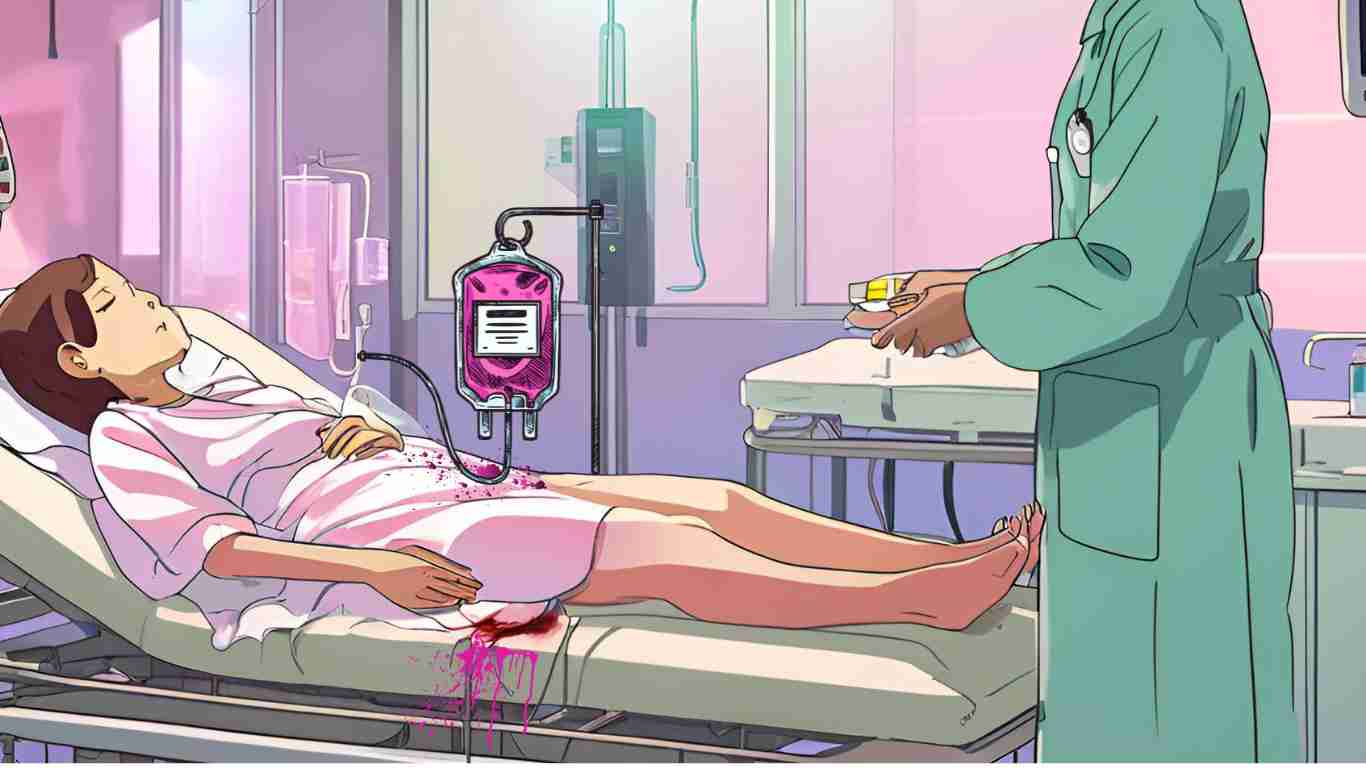
0% Report a question What’s wrong with this question? You cannot submit an empty report. Please add some details. 12345678910111213141516171819202122232425 Post partum Haemorrhage —a leading cause of maternal morbidity and mortality worldwide. This quiz will test your understanding of the types, causes, risk factors, prevention, and stepwise management of PPH. Whether it’s the “4 Ts” or emergency interventions, see how prepared you are to handle this critical obstetric emergency! 1 / 25 30 year old primigravid mother after delivery of twins has primary post-partum haemorrhage. Blood loss of approximately 1000ml. Uterus is well contracted and below the umbilicus. What is the most appropriate management? Emergency laparotomy Fundal massage Examination of genital tract under anaesthesia Intra uterine bowel tamponade Vaginal packing That’s not the next step. Correct Response In PPH with a contracted uterus, the most likely cause is genital tract trauma. The most appropriate management is examination of the genital tract under anesthesia to identify and repair any tears. Emergency laparotomy is not the first step. Fundal massage is for uterine atony. Intrauterine bowel tamponade and vaginal packing are not appropriate for bleeding from genital tract trauma. 2 / 25 Steps of PPH management include, ,,1 Starch infusion should be given until blood is available Check These are incorrect steps. Correct Steps. In the management of PPH, the correct steps would involve the use of Crystalloids as the preferred initial fluid resuscitation over starch and uncross-matched group-specific blood can be given until fully cross-matched blood becomes available. (RCOG Green-top Guideline No. 52, 2017, updated 2023) 3 / 25 A 28 year old women had rapidly enlarging vaginal heamatoma following ventouse delivery. Her vital signs are within normal limits. What is the best in the Management? Blood transfusion Explore the examination KUO for expansion Vaginal packing Vaginal examination That’s not the most appropriate management. Correct management identified. A rapidly enlarging vaginal hematoma requires active management. The best management is to explore the hematoma to evacuate the clot and ligate the bleeding vessels. Blood transfusion is considered if the patient becomes hemodynamically unstable. KUO (Keep Under Observation) is inappropriate for a rapidly enlarging hematoma. Vaginal packing is not as effective as exploration for active bleeding from a hematoma. Vaginal examination is part of the assessment but not the definitive management. 4 / 25 A 42 years old primi delivered a 4.2kg weighed baby by forceps delivery, uterus is hard & palpable below the umbilicus. But still there was a continuous bleeding. What is the next Management option? Starts oxytocin infusion Look for genital tract trauma Insert a condom catheter Inspect for complete cotyledon in placenta Re asses after 15 min That’s not the most appropriate immediate action. Correct Management. With a contracted uterus and continued bleeding after a forceps delivery of a large baby, the most likely cause is genital tract trauma. The next step is to look for genital tract trauma. Oxytocin is for uterine atony, which is not the case here. A condom catheter is used for uterine tamponade, which is a later step. Inspecting the placenta is part of routine care but does not address ongoing bleeding with a contracted uterus. Re-assessing after 15 minutes is too long with active bleeding. 5 / 25 A primigravida had a normal delivery one hour ago. She has lost 750 ml of food. Her heart rate was 80 beats per minute and blood pressure was 100/70 mmHg. Two bolus doses (5 IU) of oxytocin, 40 IU infusion of oxytocin and two doses of 0.5mg IV ergometrine given. The uterus was not well contracted and she continued to have a trickle of fresh blood. What is the most appropriate next intervention? Continue close observations Exploration of the uterus Packing of the uterus Repeat ergometrine 0.5 mg IV Start blood transfusion That’s not the next step. Correct Response The patient has PPH with persistent bleeding despite uterotonics (oxytocin and ergometrine). The next step is to consider uterine exploration to exclude retained placental tissue or uterine rupture. Blood transfusion and uterine packing are important but *after* excluding retained tissue. Repeating ergometrine is not effective if it has already failed. Close observation is insufficient with ongoing bleeding. 6 / 25 A 24 year old mother who delivered 1st baby 3 days ago admitted with PPH. Most Possible cause for her PPH is, Bicornuate uterus Coagulation disorders Retained products Uterine atony 2nd degree perineal tear That’s not the most common cause at this stage. Correct Response Postpartum hemorrhage (PPH) in the first 24 hours (primary PPH) is most commonly caused by uterine atony. From 24 hours to 6 weeks it is called secondary PPH. Bicornuate uterus and coagulation disorders can increase risk, but are not the *most* common cause. Retained products are a more common cause of *secondary* PPH, but less common in the first 24-72 hours. Second-degree perineal tear causes *bleeding*, but is not classified as PPH. 7 / 25 second degree perineal tear Extends into the perineal body Involves the anal mucosa Involves anal sphincter Is avoided by episiotomy Is avoided by forceps delivery Check Not all of these statements are correct. Correct Answer. A second-degree perineal tear extends into the perineal body. It does *not* involve the anal mucosa or anal sphincter. An episiotomy may *increase* the risk of a second-degree tear, not avoid it. Forceps delivery can *increase* the risk of perineal tears. 8 / 25 A 20-year-old mother presented with blood stained, non-offensive vaginal discharge 7 days after a normal vaginal delivery. She was not pale and afebrile. On examination pulse rate is 78 bpm, blood pressure 120/70 mmHg. On abdominal and pelvic examination, non-tender uterus of size of 12 weeks was found. What is the most appropriate management? High vaginal swab IV antibiotics Reassure mother Transvaginal USS IV fluid That’s not the most appropriate step. Correct Response The patient presents with non-offensive, blood-stained vaginal discharge 7 days postpartum, with a slightly enlarged uterus. This is likely due to subinvolution of the uterus, which is a common cause of secondary PPH. The most appropriate management is to reassure the mother. High vaginal swab, IV antibiotics, and IV fluids are not indicated without signs of infection or hemodynamic instability. A transvaginal ultrasound may be used to rule out retained products but is not the first-line management. 9 / 25 A woman starts to bleed profusely from cervical os soon after delivery. Placenta & membranes were delivered & complete. Uterus is relaxed & fails to contract with oxytocic drugs. Patient is pale, pulse rate is 120 bpm. Blood pressure is 100/60 mmHg. What is the next step in management? B lynch Uterine pack insertion Balloon tamponade Uterine artery ligation Hysterectomy That’s not the next step. Correct! The patient has PPH from uterine atony that is not responding to oxytocics. The next step is to use a uterine balloon tamponade. B-Lynch suture, uterine artery ligation, and hysterectomy are all surgical options, with hysterectomy being the last resort for uncontrolled PPH. Uterine packing may be considered in some settings, but a balloon is often preferred. 10 / 25 A patient presented with fever and severe abdominal pain one week after caesarean section. Physical examination revealed tender abdomen and an offensive vaginal discharge. Initial management should include USS abdomen and pelvis Exploratory laparotomy IV antibiotics Taking a high vaginal swab Withholding breast feeding That’s not the most appropriate immediate action. Correct choice. Fever, severe abdominal pain, and offensive vaginal discharge one week after Cesarean section suggest a postpartum infection, likely endometritis. The initial management should be IV antibiotics to treat the infection. Abdominal and pelvic ultrasound is important for diagnosis, but antibiotics should not be delayed. Exploratory laparotomy is only for severe cases. A high vaginal swab can be done, but antibiotics are the priority. Withholding breastfeeding is not part of the initial management. 11 / 25 24year old primigravida undergoes a low cavity forceps delivery for delayed 2nd stage c labour. Two hours after she complains of severe perineal pain. On examination she is pale, pulse rate is 120/ minute, blood pressure is 100/60 mmHg. What is the complication that that has occurred? Perineal haematoma Perineal tear Uterine inversion Urinary retention Uterine rupture That’s not the most likely complication here. Correct you got it. Severe perineal pain and signs of hypovolemia after a forceps delivery strongly suggest a perineal hematoma. A perineal tear would present with ongoing bleeding, not primarily pain. Uterine inversion is very rare and presents with a visible mass. Urinary retention causes lower abdominal discomfort. Uterine rupture presents with severe abdominal pain. 12 / 25 Causes for uterine atony following childbirth, Low body mass Maternal anaemia Placental accreta Polyhydramnios Prolonged latent phase of labour Check Not all of these are causes. Correct identification. Causes of uterine atony (failure of the uterus to contract after delivery) include: Placental accreta (abnormal placental adherence), Polyhydramnios (excess amniotic fluid), and Prolonged latent phase of labor. Maternal anemia can contribute but is not a *direct* cause. Low body mass index (BMI) is not a significant risk factor for uterine atony. 13 / 25 A 29 year old woman develops continuous bleeding per vagina Immediately after the delivery. Uterus is contracted and the fundus is at the level of umbilicus. Placenta and membranes were delivered completely. Pulse rate is 1 10 bpm, blood pressure 100/70 mmHg. She is being resuscitated. What is the next step of the management? Bimanual Compression of the Uterus. Examine for genital tract trauma. Exploration of the uterus. Insert misoprostol rectally. Balloon tamponade That’s not the next step. Correct decision. With continuous bleeding despite a contracted uterus, the most likely cause is genital tract trauma (cervical, vaginal, or perineal tears). The next step is to examine for genital tract trauma. Bimanual compression is for uterine atony, which is not the case here. Exploration of the uterus is indicated if trauma is ruled out. Misoprostol is for uterine atony. Balloon tamponade is for uterine atony or uncontrolled PPH *after* other causes are excluded. 14 / 25 20 year old lady delivered a baby 6 hours ago and now, complains of severe perineal pain. Vaginal examination revealed a haematoma of 5cm at the site of the episiotomy suture. What is the most appropriate step of management of this patient? Evacuate the haematoma and resuture. Urgent Laparotomy to drain the haematoma. Analgesia with Diclofenac Na Supporsitary. Place Ice bag over in perineum. Reassure that it will resolve spontaneously. That’s not the best approach for a symptomatic hematoma. Correct management. A symptomatic episiotomy hematoma requires evacuation and resuturing to control the bleeding and relieve pain. Simple analgesia will not resolve the problem. Laparotomy is not indicated. Applying an ice bag is a temporizing measure, but evacuation is definitive. Reassurance is insufficient for a large, symptomatic hematoma. 15 / 25 36 year old mother of one in her second pregnancy at 39weeks POA delivered 3.2kg baby boy via NVD. She developed heavy vaginal bleeding one hour after delivery. Uterus is well below umbilicus, and it is contracted. Placenta is complete and no retained products inside. All the medical management failed. Perineum was examined no tears detected. Three point of blood was transfused. What is the most appropriate next step of management balloon tamponade B lynch suture and modified uterine compression. Uterine artery ligation post-partum hysterectomy selective embolization That’s not the most appropriate next step in this case. Correct! The patient has PPH despite uterotonics, a contracted uterus, and no retained products. This suggests a cause other than uterine atony. The most appropriate next step is a balloon tamponade. B-Lynch suture and uterine artery ligation are surgical options but should follow balloon tamponade. Postpartum hysterectomy is the last resort. Selective embolization is a specialized technique that may be used later, if available, but tamponade is faster and more readily available. 16 / 25 Drugs used during postpartum haemorrhage factor vii oral tamoxifen intra-myometrial carboprost IV ergometrine Rectal PGE2 Check Not all of these are correct. Correct medications identified. Drugs used to manage PPH include intra-myometrial carboprost and IV ergometrine. Tranexamic acid is also a key medication for PPH. Factor VII is used in specific situations of severe PPH. Rectal prostaglandin E2 (PGE2, misoprostol) is a uterotonic, but oxytocin is first-line. Oral tamoxifen is used for breast cancer, not PPH. 17 / 25 Risk factors post-partum haemorrhage Advanced maternal age Chorioamnionitis Anaemia Obstetric cholestasis Multiparity Check Not all of these are risk factors. Correct choices. Risk factors for postpartum hemorrhage (PPH) include advanced maternal age, chorioamnionitis (infection), anemia, and multiparity. Obstetric cholestasis is a liver condition in pregnancy and does not directly cause PPH. 18 / 25 Mother developed vaginal bleeding 6 hours after delivery of her baby by NVD. She was resuscitated and tranexamic, oxytocin and misoprostol were given. Fundus was below the level of umbilicus. What’s the next step in management? Uterine exploration Hysterectomy Bukri catheter Genital tract tears should be looked for and sutured Uterine artery ligation That’s not the next step. Correct! Next step: Genital tract tears should be looked for and sutured. Key Findings: Fundus below umbilicus → uterus is well-contracted Already received tranexamic acid, oxytocin, misoprostol → atony treated Most Likely Cause: Trauma (cervical/vaginal/perineal tears) or retained products Management Steps: First action: Inspect for tears and suture them If no tears → explore uterus for retained tissue If bleeding persists → escalate to Bakri balloon, uterine artery ligation, or hysterectomy Why not others? Uterine exploration needed only if trauma ruled out, hysterectomy too drastic at this stage. 19 / 25 25-year-old multiparous woman with 3 previous vaginal deliveries complained of severe perineal pain following delivery of her 4th baby. Fundus was below the level of umbilicus. Her BP was 100/70 and she is being resuscitated) Placenta was observed and it was complete. What is next step in management? Tranexamic acid Fundal pressure look for haematoma at episiotomy site examine for episiotomy site for hamartoma IM pethidine That’s not the most appropriate immediate step. Correct Response Severe perineal pain following delivery, especially with resuscitation efforts, suggests a possible perineal hematoma. The next step is to look for a hematoma at the episiotomy site or within the perineum. Tranexamic acid and fundal pressure do not directly address a hematoma. Examining for a hamartoma is not the primary concern. Pethidine is for pain relief, but the source of the pain must be identified first. 20 / 25 A 25-year-old primi mother at a period of 39 weeks of gestation developed severe vaginal bleeding following delivery. On examination, the uterus was soft and the fundus was above the level of the umbilicus. She was not responding to ergometrine, oxytocin and misoprostol. What is the most appropriate next management option? Administration of tranexamic acid Examination under anesthesia Hysterectomy Uterine artery ligation Uterine balloon tamponade That’s not the next step. Correct Answer. The patient has severe PPH due to uterine atony that is unresponsive to initial uterotonics (ergometrine, oxytocin, misoprostol). The next step is uterine balloon tamponade. Tranexamic acid should have already been given, but it does not address the mechanical problem of atony. Examination under anesthesia is a part of the management but not the immediate next step. Hysterectomy is a last resort. Uterine artery ligation is a surgical option, but balloon tamponade should be tried first. (RCOG Green-top Guideline No. 52, 2017, updated 2023) 21 / 25 A 30 year old primIgravida had major postpartum hemorrhage due to uterine atony. No response despite appropriate uterotonics and tranexamic acid and bleeds in between uterine massage. What’s the next step in management? B Lynch suture Insert Vaginal pack Balloon tamponade Perform bilateral iliac artery ligation Perform hysterectomy That’s not the next step. Correct! The patient has severe PPH from uterine atony that is not responding to medical management. The next step is to use mechanical methods to control bleeding. Balloon tamponade is typically performed before surgical procedures. B-Lynch suture, uterine artery ligation, and hysterectomy are all surgical options, with hysterectomy being the last resort for uncontrolled PPH. A vaginal pack will not address the uterine atony. (RCOG Green-top Guideline No. 52, 2017, updated 2023) 22 / 25 A 28 year old primi mother complained severe pain at the episiotomy site, 2 hours after the vaginal delivery. On examination there was mild pallor, BP-110/60, PR-100. A large hematoma was present at the episiotomy site. What is the most appropriate management? Administrator pethidine Administer Tranexamic acid Allow to resolve spontaneously Exploration of the haematoma Tight vaginal packing That’s not the most appropriate action. Correct! The patient has an episiotomy hematoma. The most appropriate management is exploration of the hematoma to evacuate the clot and ligate any bleeding vessels. Analgesia alone will not resolve the hematoma. Tranexamic acid may reduce further bleeding but does not address the existing hematoma. Allowing spontaneous resolution is not appropriate for a large hematoma. Tight vaginal packing is not indicated for an episiotomy hematoma. 23 / 25 Regarding Post Partum Haemorrhage, More than 1000 ml is considered as a major PPH Life threatening hemorrhage cause by 30% loss of blood If the clinical signs are reassuring, bleeding is minor bleeding Misoprostol is as effective as oxytocin in preventing PPH. Crystalloids are preferred over colloids in initial resuscitation Check Not all of these statements are correct. Correct choices! Postpartum hemorrhage (PPH) is defined as blood loss of 500 ml or more after vaginal birth or 1000 ml or more after Cesarean birth. Major PPH is often defined as >1000ml. Life-threatening hemorrhage can occur with a 30-40% blood loss. If clinical signs are reassuring, bleeding may still be significant and should not be dismissed as minor. Oxytocin is superior to misoprostol for *preventing* PPH. Crystalloids are the initial fluid of choice in resuscitation. (RCOG Green-top Guideline No. 52, 2017, updated 2023) 24 / 25 A 35 years primi gravida is delivered by caesarean section prolong second stage labor with 600ml blood loss no further vaginal bleeding. Following day she was pale. PR – 110 bpm. Abdominal examination uterus slightly high in ab palpation and deviated to R dside. pre op HB 11.2. next step of mx Reopening abdomen Start blood transfusion Pelvic USS IV antibiotics Repeat FBC That’s not the most appropriate next step. Correct! The patient is pale with tachycardia, and the uterus is high and deviated, suggesting possible retained products of conception or a pelvic hematoma/collection. The most appropriate next step is a pelvic ultrasound (USS) to investigate the cause. Reopening the abdomen is too invasive at this stage. A blood transfusion may be needed, but the cause of the ongoing issue needs to be determined first. IV antibiotics are not indicated without signs of infection. A repeat FBC is useful but does not address the acute problem. 25 / 25 23 year old primi mother presented with vaginal bleeding 1hr following delivery. Estimated blood loss 1l. PR 90bpm, BP 100/ 60 mmhg. On abdominal examination uterus was soft and fundus was above the level of umbilicus. Episiotomy has been sutured. Oxytocin infusion is commenced 30mins ago. What is the most appropriate management? Administer IV ergometrine Administer of IV Tranexamic acid Check clotting profile Examine the cervix for tears Insert vaginal pack That’s not the most appropriate next step. Correct! You’ve chosen the right action. The patient has primary postpartum hemorrhage (PPH) with a soft uterus and bleeding despite oxytocin, suggesting uterine atony. The most appropriate next step is to administer IV ergometrine, a second-line uterotonic. Checking clotting profile, examining the cervix, and inserting a vaginal pack are later steps if initial measures fail. IV tranexamic acid should be given, but ergometrine is the priority here. (RCOG Green-top Guideline No. 52, 2017, updated 2023) Your score isThe average score is 9%Share these MCQs with your friends! LinkedIn Facebook 0% #postpartum haemorrhage #PPH